Architecture · 6 min read
How to Choose Stone for Exterior Walls
Thickness, fixing method and coursing matter as much as the stone you select.
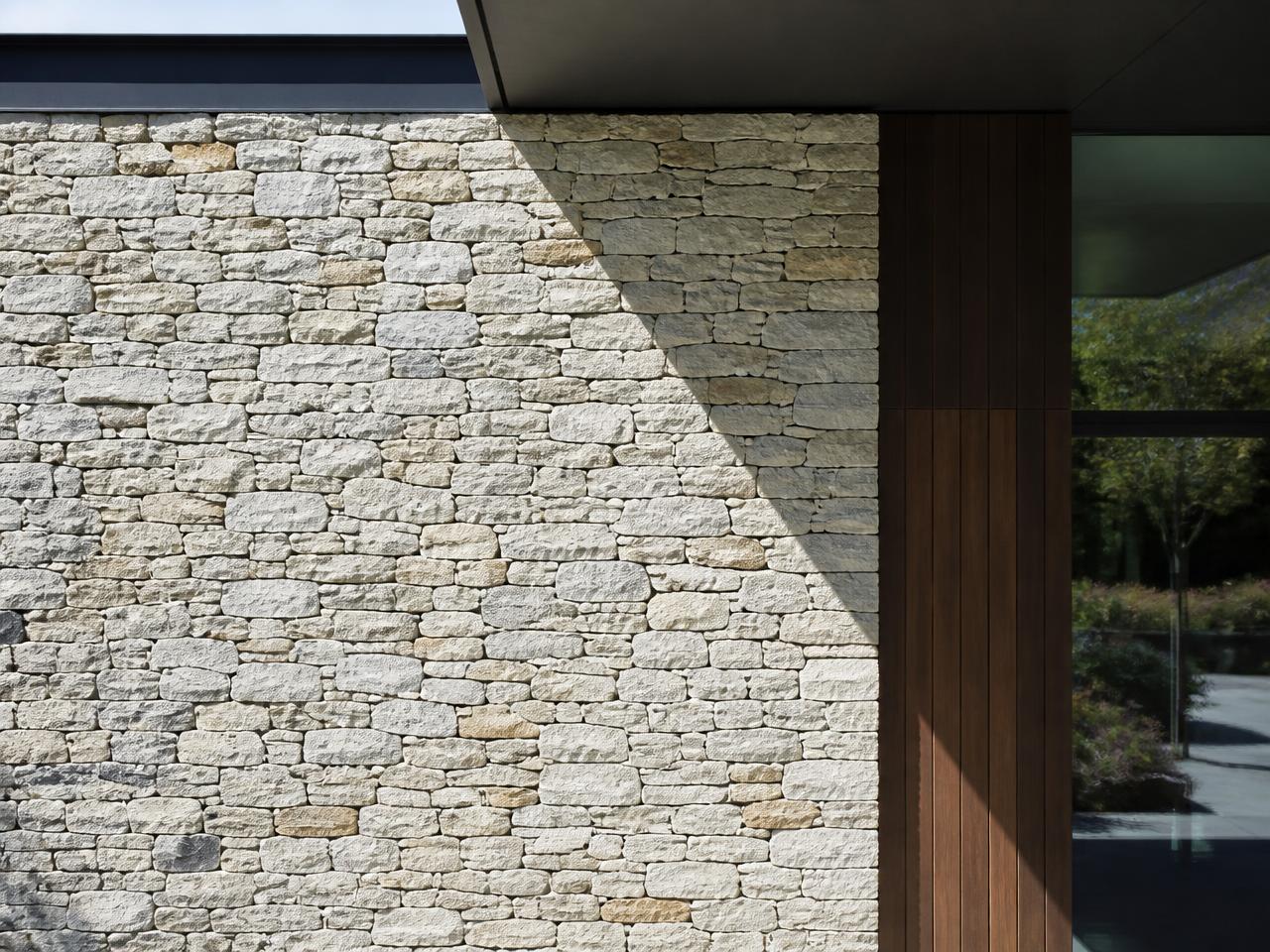
Exterior wall stone divides into two approaches: cladding fixed to a structural backing, and solid or faced masonry built up in courses. The visual difference is depth — cladding reads flatter unless the coursing has genuine relief.
Confirm thickness and weight early with the structural engineer. Thin calibrated cladding can be adhesive-fixed with mechanical restraint; heavier ledgestone and rubble need a designed support system.
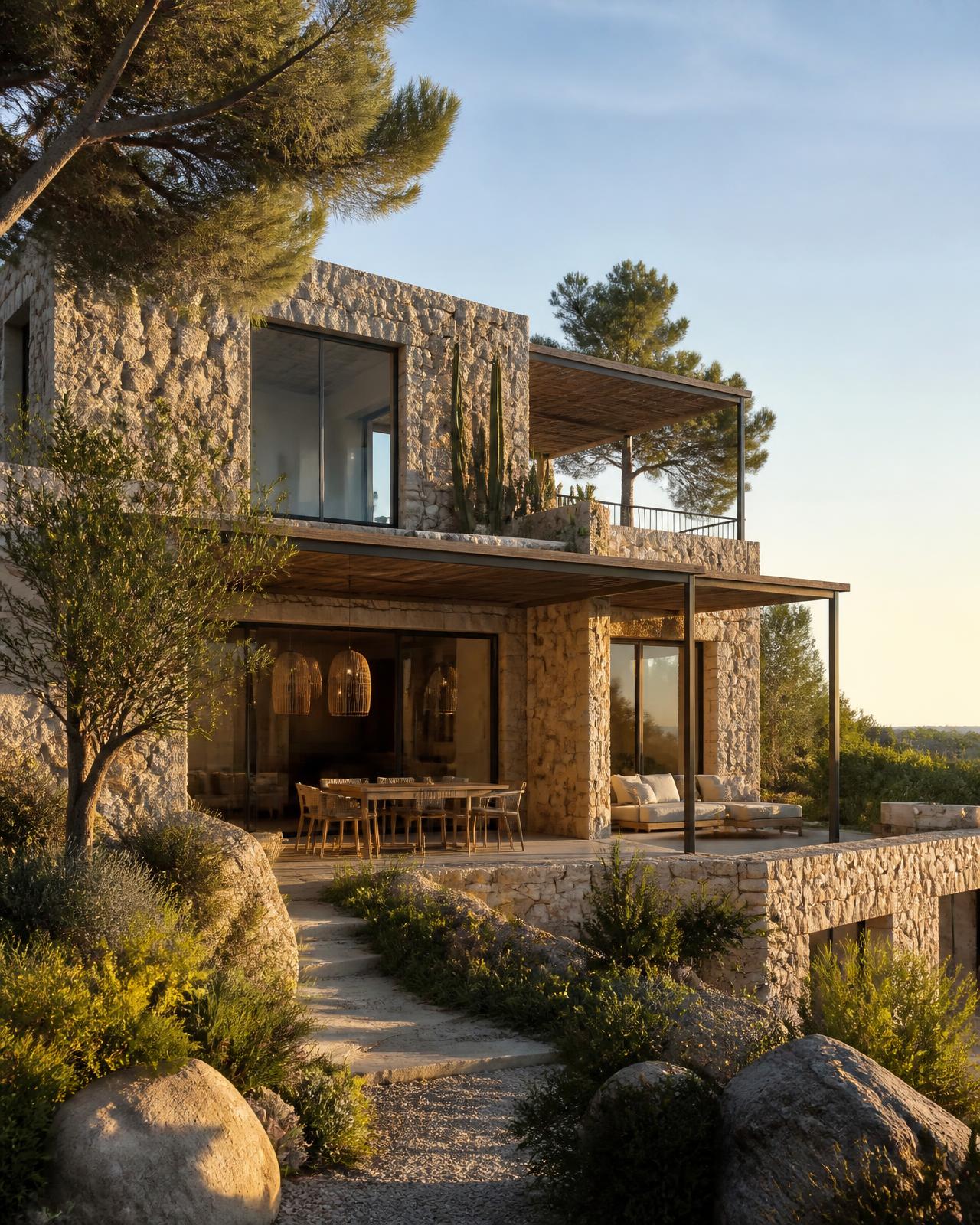
Coursing sets the character. Random rubble looks settled and traditional; consistent horizontal courses with varying lengths read contemporary. Dry-stacked joints emphasise shadow, mortared joints emphasise pattern.
Detail the top of the wall properly. A coping or overhang that throws water clear is what keeps a stone wall looking well for decades.
Considering this material for a project? Discuss your project or explore the collection.