Stone Guide · 6 min read
How to Choose Natural Stone for a Garden
Start with light, drainage and how the space is used — the material follows from there.
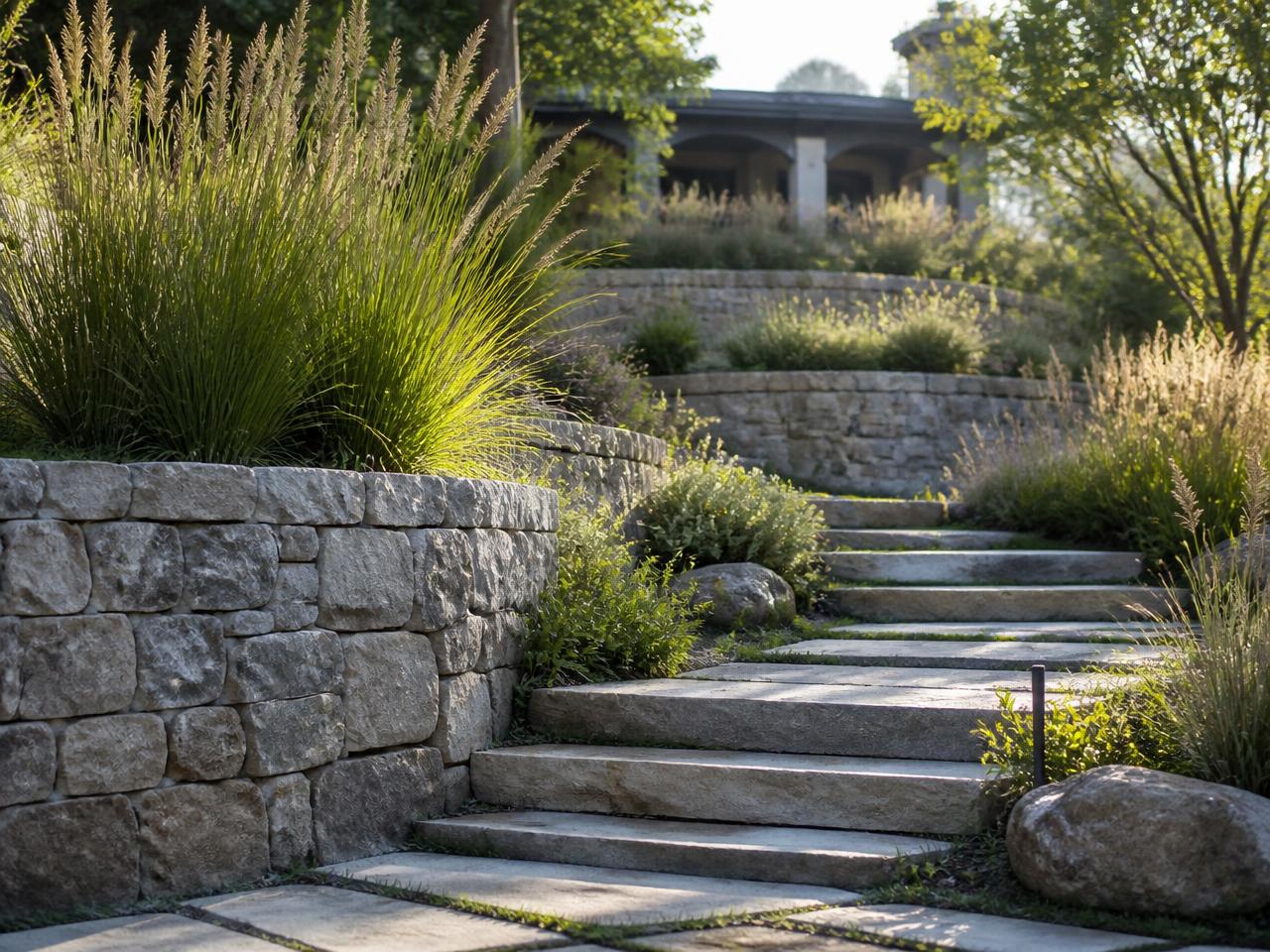
A garden is read from a distance before it is walked through, so the first decision is tonal. Warm stones such as sandstone lift a shaded garden and hold evening light; grey slate and pebbles recede, letting planting carry the colour.
The second decision is surface. Paving that sits in full sun should be honed or brushed rather than polished, which becomes uncomfortably bright. Anywhere that stays wet — pool surrounds, shaded thresholds, stepped paths — needs a riven, sandblasted or bush-hammered finish for grip.
Third, consider drainage and jointing. Wide joints planted with low ground cover soften a large paved area and let water pass. Tight joints read as more architectural but require a consistently calibrated stone.
Finally, order a sample and leave it outside for a fortnight. Stone changes when it is wet and again as it weathers; a sample seen in the actual light of the site is worth more than any photograph.
Considering this material for a project? Discuss your project or explore the collection.